Introduction: The Unprecedented M&A Surge in Western US Landscaping
High-Value Liquidity Across the Western Territory
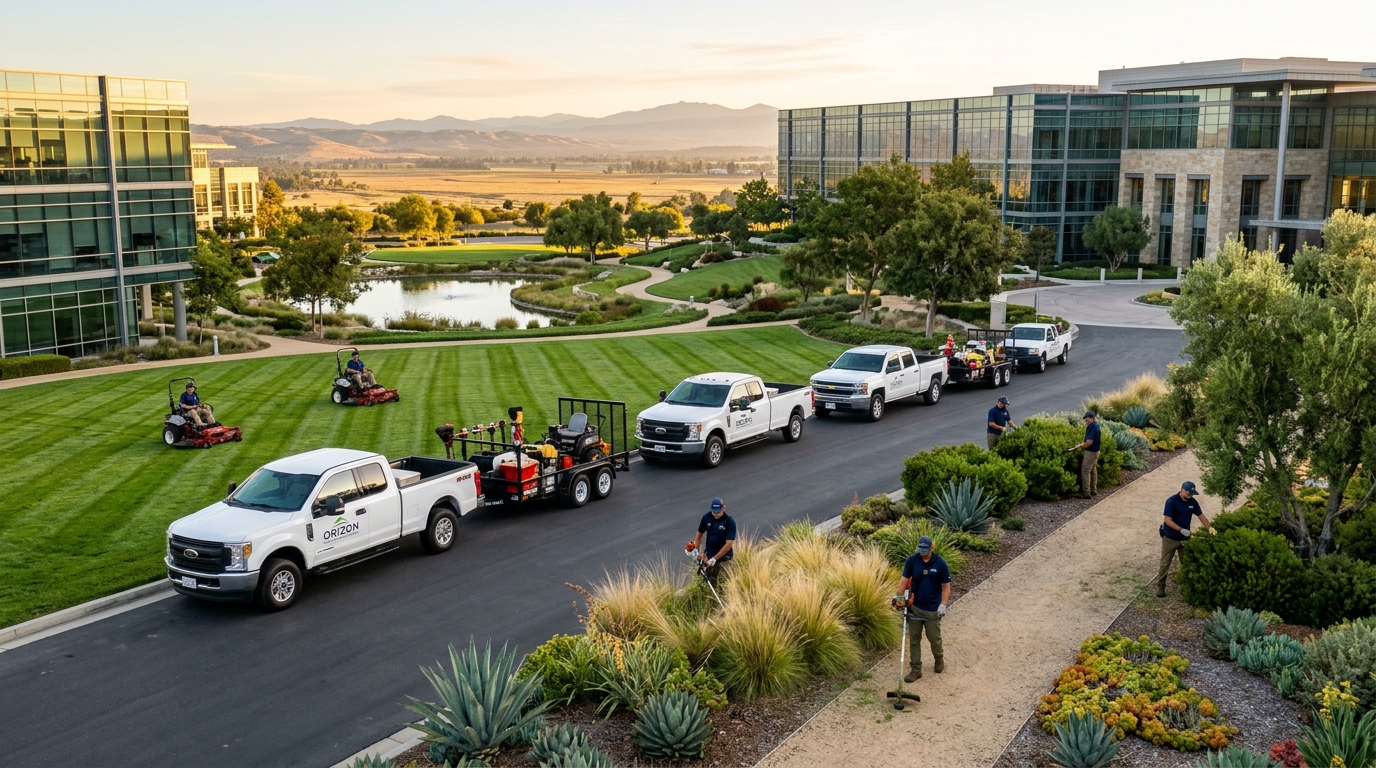
The commercial landscaping industry across the Western United States—spanning California, Nevada, Arizona, Colorado, New Mexico, and Idaho—has undergone a massive structural evolution.
What was historically viewed as a fragmented cottage industry of localized owner-operators has transformed into a premier, route-based facility service aggressively targeted by institutional investors. Today, private equity (PE) sponsors account for approximately 76% of total deal volume in the landscaping sector, executing programmatic “buy-and-build” strategies to capture regional route density, expand branch footprints, and secure skilled labor infrastructure.
Private equity accounts for more than three-quarters of all landscaping acquisitions.
Landscape founders plan to exit within 10 years, yet over 70% lack a formal plan.
Operators receiving 6 to 10 acquisition inquiries monthly jumped from 8% to 26%.
This intense consolidation wave is fueled by powerful macro market tailwinds:
Non-discretionary corporate demand, contract-backed revenue visibility, and inflation-indexed pricing power protect commercial landscaping operating margins even during broader macroeconomic headwinds.
Rapid commercial expansion across interior Western growth corridors (Phoenix, Tucson, Denver, Las Vegas, and Salt Lake City) combined with high-density contract values in coastal metropolitan markets (Los Angeles, San Francisco Bay Area, and Puget Sound) drives consistent demand for commercial grounds management.
Baby Boomers represent approximately 60% of current sell-side business listings. Industry data indicates that 77% of Boomer business owners plan to exit within 10 years (and 57% within 5 years). However, over 70% lack a formal exit plan, and fewer than 27% have ever conducted a professional fair-market valuation.
“The scarcity of institutional-grade, contract-dense landscaping assets has created a fierce seller's market. The proportion of qualified landscape operators receiving 6 to 10 unsolicited acquisition inquiries every month tripled from 8% in 2025 to 26% in 2026. For founder-operators across the West, this environment offers a historic liquidity window to monetize their life's work at premium enterprise multiples.”
What’s in It for You? Valuations, Deal Architecture, and Financial Payoff
Understanding how institutional buyers value and structure acquisitions allows founders to optimize their operations for maximum financial yield. Smaller owner-operated businesses (typically under $750,000 in earnings) trade on Seller’s Discretionary Earnings (SDE) multiples.
However, as an enterprise scales into a commercial asset, valuation shifts to adjusted, Quality of Earnings (QoE)-vetted EBITDA (Earnings Before Interest, Taxes, Depreciation, and Amortization) multiples, unlocking significant scale premiums.
Enterprise Scale Tiers and Valuation Multiples
2026 M&A Benchmarks| Enterprise Scale Tier | Trailing 12-Mo. Adjusted Earnings | Valuation Multiple Range | Cash at Close (% Total) | Rollover Equity | Founder Transition |
|---|---|---|---|---|---|
| Main Street / Owner-Led | Under $750,000 | 2.5x – 4.0x SDE / EBITDA | 75% – 85% | 0% – 10% (10%–20% Seller Note) | 3 – 6 Months Handover & Consulting |
| Regional Add-On / Tuck-In | $750,000 – $2,000,000 | 4.5x – 7.0x EBITDA | 70% – 80% | 10% – 20% | 1 – 2 Years Branch Integration / Field Ops |
| Middle-Market Scale Asset | $2,000,000 – $5,000,000 | 6.5x – 9.0x EBITDA | 65% – 75% | 15% – 25% | 2 – 4 Years Regional Executive Leadership |
| Institutional Platform | $5,000,000 – $15,000,000+ | 9.0x – 13.0x+ EBITDA | 60% – 70% | 20% – 35% | 3 – 5 Years Executive Suite / Platform Head |
Unpacking the Financial Payoff for Founders
De-Risking Personal Balance Sheets
Operating an independent commercial trade business requires founders to personally guarantee bank credit facilities, equipment leases, fuel cards, commercial yard mortgages, and surety bonds. Executing a strategic recapitalization or sale delivers 60% to 80% liquid cash upfront at closing, transferring operating liabilities directly to the platform buyer and completely extinguishing the founder’s personal guarantees.
The “Second Bite of the Apple”
In a platform recapitalization, founders roll over 15% to 25% of their transaction proceeds tax-deferred into the buyer's holding company. Private equity roll-ups drive massive equity growth through multiple arbitrage: acquiring smaller regional add-ons at 4.5x to 6.5x EBITDA multiples and integrating them into a unified platform that eventually exits to mega-funds or sovereign wealth buyers at 11.0x to 14.0x EBITDA. Combined with procurement synergies, route optimization, and corporate debt paydown, this rolled equity stake typically achieves a 2.0x to 3.5x Multiple on Invested Capital (MOIC) at the platform's secondary exit 3 to 6 years later.
Institutional buyers subject seller financials to rigorous sell-side and buy-side Quality of Earnings (QoE) audits. Founders who understand these financial accounting realities can prevent catastrophic late-stage price retrades:
Moving from cash-basis tax accounting to GAAP accrual standards requires precise matching of revenue to performance obligations. Unbilled Work-in-Progress (WIP) and deferred commercial enhancement billings must be properly reconciled.
While legitimate owner add-backs (discretionary travel, personal vehicle leases, family board fees) increase EBITDA, buyers aggressively audit unsupported add-backs. Operational adjustments—such as normalizing related-party yard rents to fair market value or replacing an active founder's duties with market-rate general manager salaries—can reduce baseline run-rate EBITDA if not defended properly.
Green industry cash flows fluctuate seasonally, with spring enhancement surges producing cash surpluses while winter operations drain cash reserves. Setting an inaccurate 12-month trailing Net Working Capital peg can force founders to deliver excess cash at closing or absorb dollar-for-dollar purchase price reductions.
Active Western Consolidators & Strategic Market Dynamics
PE Platforms Deploying CapitalConsolidation across Western states is spearheaded by active private equity platforms, including:
- • Elevation Landscape Group: Trinity Hunt Partners / Fund VII – anchored by Landscape Endeavors in Colorado Springs, targeting Mountain West expansion.
- • Cultivar Group: Formerly Sperber Landscape Companies, backed by Nexus Capital Management and Florac – holding West Coast assets including Bemus Landscape in CA, Brookstone Landscape & Design in WA, and Crystal Greens in OR.
- • Monarch Landscape Companies: Audax Private Equity – operating Jensen Landscape in CA, Premiere Lawn Service in WA, and Environmental Designs in CO.
- • Osprey Landscape Group: Southfield Capital – anchored by Pacific Landscape Management in OR, LandGraphics in Southern CA, and Earthworks in TX.
- • Verde Equity Partners: Verde Fund I – anchored by Chula Vista Landscaping in AZ, executing rapid Southwestern add-ons.
Publicly traded strategic acquirers like BrightView Holdings curtailed programmatic add-on M&A for eleven consecutive quarters, determining that repurchasing their own public shares at 7.5x EBITDA was more accretive than buying private targets at 8.0x to 9.0x EBITDA. This strategic discipline from public market leaders created a wide-open runway for well-capitalized middle-market private equity platforms to aggressively compete for quality Western assets.
What Drives Top-Dollar Valuations in Western Landscaping?
Institutional buyers perform rigorous operational underwriting. To command double-digit multiples, commercial landscape companies must demonstrate revenue predictability, route efficiency, labor compliance, and proactive regulatory readiness.
Value Profile Comparison: Low Multiple vs. High Multiple
| Underwriting Category | Low Multiple Profile (3.0x – 5.0x EBITDA) | High Multiple Profile (8.0x – 12.0x+ EBITDA) |
|---|---|---|
| Revenue Mix | Dominant residential design-build, hardscape installation, one-off project construction. | Contracted commercial grounds maintenance, HOA, and municipal service agreements (60%–75%+ maintenance target). |
| Contracts & Churn | Short-term or verbal agreements; high annual customer churn; project bids subject to seasonal rebidding. | Multi-year commercial contracts (2–3 years) with automatic renewal clauses and built-in CPI cost escalators. |
| Route Density & Logistics | Dispersed routes across wide geography; crew windshield/drive time exceeds 25% of working shifts. | Dense branch clusters in commercial corridors; windshield/drive time strictly kept below 15%–18%. |
| Labor Sourcing & Safety | High seasonal turnover; unverified labor documentation; extreme exposure to statutory H-2B visa caps. | Year-round core domestic workforce; verified wage-and-hour compliance; Experience Modification Rate (EMR) < 1.0 (or < 0.90). |
| Western Regulatory Compliance | Outdated gas-powered fleet; unaddressed CARB compliance; reactive response to regional water bans. | Active zero-emission fleet migration; established commercial water management, xeriscaping, and smart irrigation units. |
Proactive Regulatory Compliance as a Value Multiplier
Fleet Electrification (CARB / AB 1346)
In California, Air Resources Board (CARB) Small Off-Road Engine (SORE) regulations under Assembly Bill 1346 mandate that newly manufactured small off-road engines under 19 kW (mowers, leaf blowers, trimmers) must be zero-emission. Operators who proactively build depot charging infrastructure, mobile solar charging trailers, and battery fleet transitions avoid dollar-for-dollar purchase price reductions or holdback escrows during buyer diligence.
Water Scarcity Mandates (CA AB 1572)
Statutory bans on using potable water for non-functional turf on commercial, institutional, and HOA properties (alongside similar turf removal mandates in Nevada and Arizona) are reducing traditional mowing acreage. Top-tier operators turn this mandate into a high-margin growth engine by offering commercial turf conversion, xeriscaping redesign, and smart irrigation retrofits. Buyers assign premium multiples to consultative water-management providers.
Why Landscaping Founders Need Cortland Business Brokers & The “Operator-Broker” Model
Navigating a business exit without specialized advisory often leads to severe value leakage or deal failure. Approximately 70% of lower-middle-market business listings fail to close when represented by traditional generalist brokers who view companies solely through standard financial spreadsheets and generic industry multiples.
Introducing Stan Cortland & Cortland Business Brokers
CA DRE #02079242 (Responsible Broker: Ronny Santana, License #00823528, Saratoga, CA)
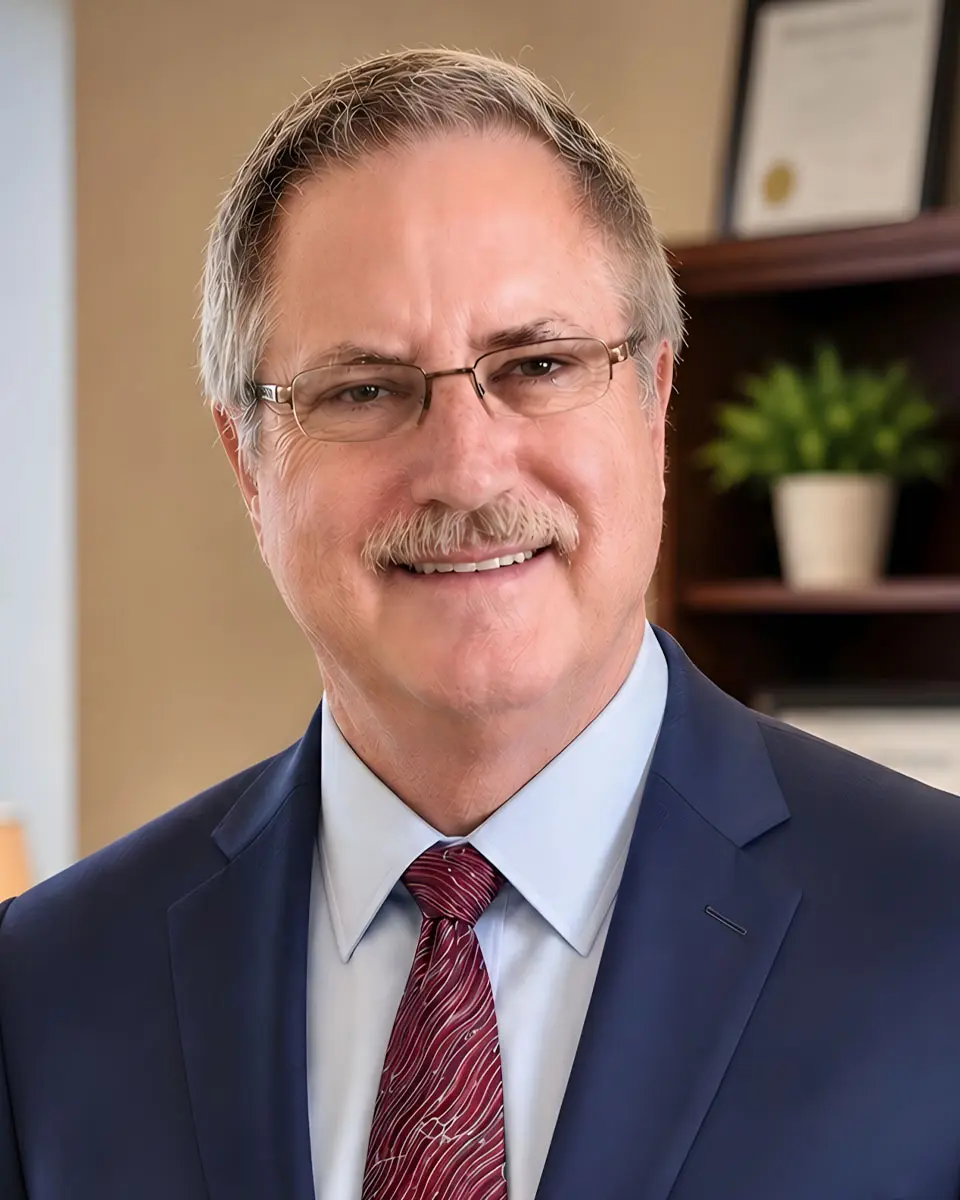
To solve this advisory gap, Stan Cortland established Cortland Business Brokers, deploying the “Operator-Broker” model. Stan Cortland brings over 37 years of high-level sales, executive management, and real-world owner-operator experience. Notably, he owned, scaled, and exited the 3rd largest Xerox dealership in the nation, directing installation, repair, field service crews, complex supply chains, and recurring service contracts—operational mechanics that directly mirror field logistics, crew routing, and contract maintenance in commercial landscaping.
The firm maintains active licensing and transaction reach across six Western states: California, Nevada, Arizona, Colorado, New Mexico, and Idaho.
The Three Pillars of the Operator-Broker Model
Verifiable Operational Fluency
Having scaled and managed large field service operations, Cortland translates daily operational metrics—crew dispatch efficiency, technician utilization rates, route density, and contract gross margins—into quantifiable, defensible EBITDA value that withstands buyer Quality of Earnings (QoE) audits.
Peer-to-Peer Empathy & Credibility
Having made payroll, navigated supply chain bottlenecks, managed field crews, and executed personal exits, Cortland speaks the founder's language. This shared background builds authentic credibility, ensuring that employee protection (structuring management equity pools) and legacy preservation are prioritized.
Strategic Deal Structuring & De-Risking
Grounded in the philosophy that “Price is just ONE lever,” Cortland actively manages transaction architecture. This includes mitigating California's 13.3% state capital gains tax impact (where total combined effective tax burdens reach 33% to 37%) through strategic deal structuring, pre-qualifying SBA financing parameters, and managing Responsible Managing Officer (RMO) licensing transfers.
Multi-State Market Arbitrage & Proven Track Record
6 Western States • 8 California Deals Closed in 24 MonthsBy holding active licenses across six Western states, Cortland Business Brokers connects local landscaping sellers directly with capital-rich out-of-state buyers, regional consolidators, and private equity platforms. Creating competitive regional auction dynamics regularly yields higher final sale prices than local generalist brokers can generate.
Cortland Business Brokers brings a proven track record, having facilitated 8 successful California acquisitions in two years alone, including specialty contractor service deals across plumbing, roofing, swimming pool, and solar trades. The operational mechanics of these contractor niches—managing crew dispatch, field service logistics, CSLB compliance, materials supply chains, and recurring maintenance contracts—directly transfer to commercial landscaping grounds management.
Exit Readiness & Navigating the Transition: A Step-by-Step Roadmap
Tailored Post-Acquisition Transition Models
Acquirers customize post-closing roles based on the founder's age, operational involvement, and personal goals:
Immediate Clean Exit
Ideal for retiring founders (aged 62+). Involves a 3 to 12-month consulting handover focused on transitioning commercial client relationships, supported by 0%–10% rollover equity and maximum upfront cash at close.
Regional Executive / Platform Leader
Designed for mid-career entrepreneurs (aged 40–58). Founders retain 15% to 30% rollover equity and serve 1 to 4 years as Regional President or Division VP, managing field execution while the platform absorbs HR, legal, and finance administrative burdens.
Board Member / Strategic Advisor
Suitable for experienced founders stepping back from daily field operations. Involves 10% to 20% rollover equity and a governance role supporting platform board strategy, client retention, and regional M&A sourcing.
Legal Safeguards: Enforceability of Non-Compete Covenants
Acquirers require non-compete agreements to protect business goodwill, but statutory rules vary by state across the West:
While California broadly prohibits employment non-competes under Section 16600, Section 16601 provides an explicit statutory exception for covenants executed in connection with the bona fide sale of goodwill or an owner's entire equity interest. 3 to 5-year non-competes are fully enforceable when tied directly to the Equity Purchase Agreement and goodwill transfer.
Restrictive covenants are strictly regulated, but non-compete agreements remain fully valid and enforceable for business sellers who hold at least one percent (1%) equity in the entity being sold.
The 36-Month Sell-Side Exit Roadmap
Strategic Foundations & Decoupling
Shift daily dispatch, crew scheduling, and estimating to branch and operations managers. Document all standard operating procedures (SOPs).
Phase out discretionary residential construction and one-off design-build. Reorient sales toward multi-year commercial maintenance agreements with automatic renewals and CPI escalators.
Infrastructure, Tech & GAAP Conversion
Implement Aspire, Jobber, or SingleOps software to track job costing, labor efficiency, technician utilization, and route windshield time.
Move from cash-basis tax accounting to GAAP accrual standards. Audit wage-and-hour compliance, Form I-9 files, and maintain EMR < 1.0.
Audit route logistics using fleet telematics to keep windshield drive time strictly below 15% to 18%.
Transaction Execution & Auction Launch
Finalize CARB zero-emission fleet transition plan (AB 1346) and document commercial water management, xeriscaping, and smart irrigation revenues.
Commission an independent sell-side QoE report to validate normalized EBITDA, quantify add-backs, and set a defensible NWC baseline.
Engage Cortland to launch a structured, multi-state competitive auction across CA, NV, AZ, CO, NM, and ID to maximize final valuation.
Conclusion & Call to Action: Take Control of Your Exit Strategy
The unprecedented influx of private equity capital across Western US commercial landscaping offers founders a rare opportunity to de-risk their personal wealth, secure top-tier valuations, and protect their legacy. However, achieving double-digit multiples requires disciplined operational preparation and specialized transaction execution.
Cortland Business Brokers aligns completely with founder interests through a 100% Success-Based Fee Structure—meaning there is zero upfront retainer risk, and fee compensation is strictly earned when your transaction successfully closes.
Whether you plan to transition out of your business in 6 months or 3 years, taking control of your exit starts with establishing a defensible operational baseline today.
100% Success-Fee Based
Zero transaction compensation earned until funds are wired at close of escrow.
$0 Upfront Retainers
We absorb all preliminary marketing, valuation models, and confidential data room costs.
100% Confidential
Gated NDA protocols ensure employees, competitors, and clients never discover the process.
Stan Cortland, Managing Broker
CA DRE #02079242 (Responsible Broker: Ronny Santana, License #00823528, Saratoga, CA)
Stan Cortland brings over 37 years of sales, executive management, and operational exit experience. Prior to founding Cortland Business Brokers, he owned, scaled, and exited the nation's 3rd largest Xerox dealership, managing field service logistics, fleet dispatch, and contract maintenance agreements. Today, he represents lower-middle-market contractor and commercial facility service founders across California, Nevada, Arizona, Colorado, New Mexico, and Idaho.
Ready to Discover the True Enterprise Value of Your Landscaping Business?
Contact Stan Cortland and the team at Cortland Business Brokers for a confidential, no-cost business valuation baseline. Every evaluation is personally conducted within 48 hours.