
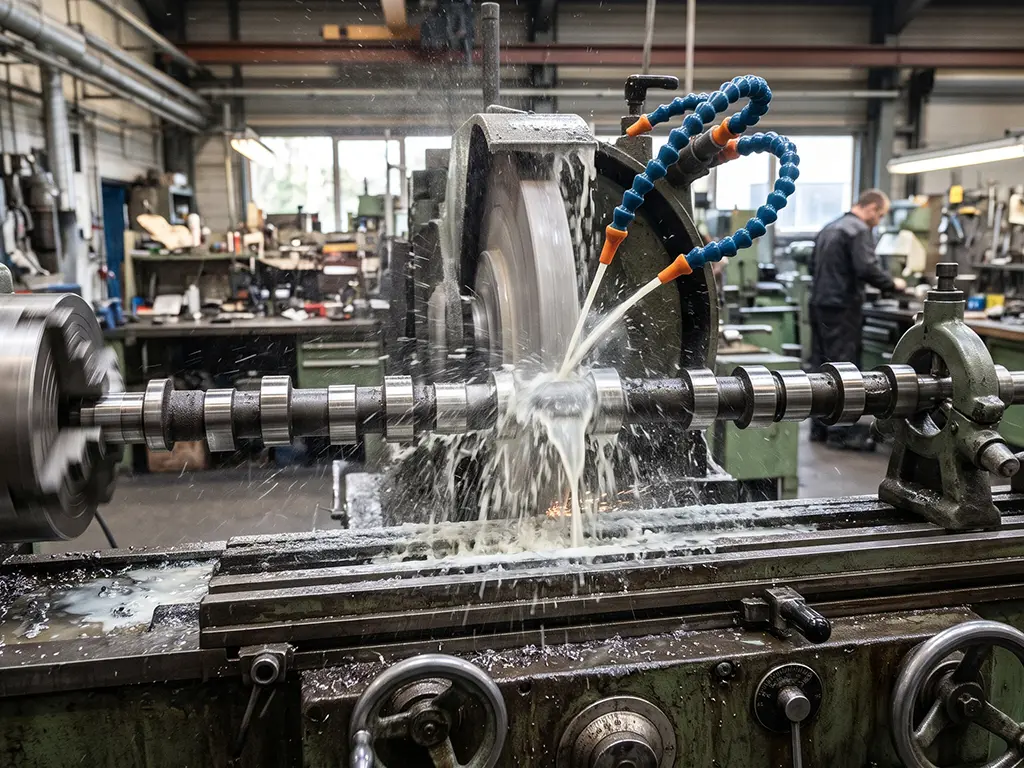
1. Introduction: The 2026–2027 Western US Precision Manufacturing M&A Window
The advanced precision manufacturing sector across the Western United States is navigating a historic, unprecedented consolidation wave. Driven by the aggressive reshoring of critical domestic supply chains, historic federal capital injections via the CHIPS and Science Act and the Infrastructure Investment and Jobs Act (IIJA), and the accelerating “Silver Tsunami” generational shift of founder-operators who established facilities in the 1970s and 1980s, market demand for precision manufacturing assets has reached peak velocity. Proprietary industry transaction data reveals a 19.6% year-over-year surge in precision manufacturing deal volume in early 2026, opening an extraordinary, time-sensitive liquidity window for founder-operators of precision machine shops (NAICS 332710) and turned product manufacturers (NAICS 332721).
Yet, while the Western United States represents an extraordinary seller’s market, the industry is undergoing a severe market bifurcation. A deep structural divide has opened between modernized, automated, and quality-certified facilities—which are commanding record institutional enterprise multiples—and legacy manual job shops. Uncertified job shops reliant on single-shift manual labor face relentless margin compression, rising wage inflation, daunting technological reinvestment requirements, and the risk of secondary market liquidation.
For machine shop founders who have spent 30 to 40 years building their enterprises from the shop floor up, contemplating an exit carries deep operational and emotional friction. Operators face severe “CapEx fatigue” after decades of committing $250,000 to over $1,000,000 per multi-axis machine, ongoing regulatory exhaustion from AS9100 Rev D audits, and the daunting, immediate threat of mandatory CMMC 2.0 Level 2 DoD cybersecurity compliance (NIST SP 800-171 Rev. 2). Many founders harbor a legitimate fear of “Wall Street” asset-strippers dismantling their life's work or harming long-standing machinists.
This document serves a dual purpose: first, to detail the five primary financial and strategic benefits available to shop owners in today's M&A market; and second, to demonstrate how Stan Cortland and the advisory bench at Cortland Business Brokers (CBB) deploy an operator-led M&A framework to defend financial add-backs, neutralize Western tax and regulatory deal-killers, safeguard employee legacies, and engineer peak net cash proceeds for exiting owners.
2. What’s in It for Sellers? 5 Core Benefits of the Current Market Dynamics
Owners of NAICS 332710 and 332721 facilities across California, Washington, Arizona, Utah, Colorado, Nevada, New Mexico, and Idaho sit in a commanding strategic position. Five core market forces are driving historic enterprise value for prepared sellers today:
1. Surging Institutional Buyer Competition & Deal Velocity
Capital Markets LiquidityActive consolidator platforms in the US precision machining sector are backed by private equity sponsors executing aggressive “buy-and-build” roll-up strategies.
Cash at close in prevailing lower-middle-market structures, complemented by 15% to 20% seller notes and performance earn-outs.
For NAICS 332721 (+159% higher than the national median across all industries), with 10-year terms often funding industrial real estate alongside the business.
2. Elevated Valuation Multiples & Stacking Premiums
Valuation ExpansionExpanding Baseline Valuation Bands
Customer Concentration Audit & Haircut Thresholds
Strategic buyers aggressively audit revenue concentration. While a diversified client roster (no single client exceeding 15% of revenue) commands peak multiples, high concentration triggers sharp valuation haircuts:
3. Workforce Monetization (“Acqui-Hiring”)
34,200 Unfilled US RolesCapitalizing on Severe Labor Scarcity: The United States faces an acute, systemic shortage of skilled technical labor, with an estimated 34,200 open, unfilled positions nationwide for specialized CNC programmers, aerospace machinists, and tool and die makers.
Human Capital as an Asset: Institutional acquirers are no longer pricing equipment fleets or customer lists in isolation; they are executing explicit “acqui-hiring” strategies. Assembled shop-floor teams, master G-code programmers, setup technicians, and documented Standard Operating Procedures (SOPs) are priced directly as high-margin strategic assets.
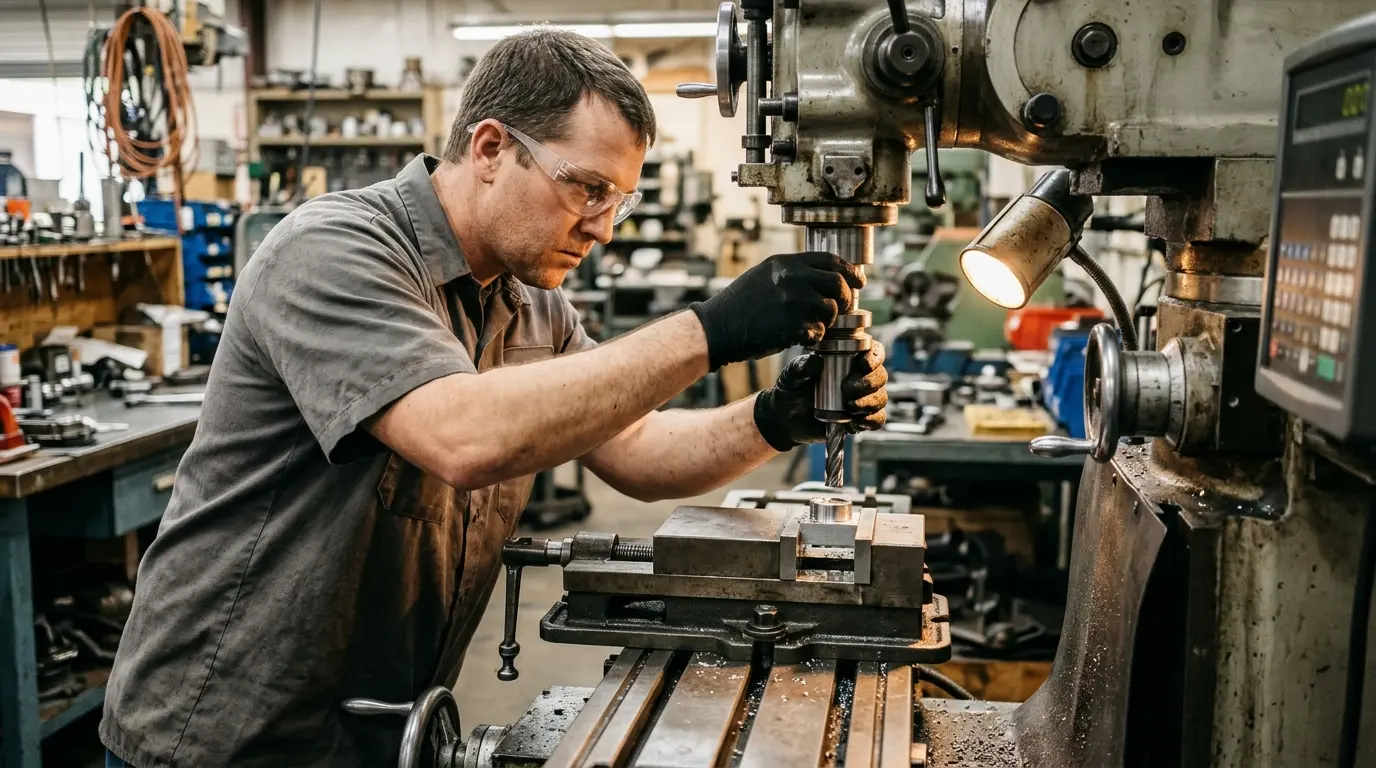
Turnkey teams of setup technicians, master G-code programmers, and AS9100 machinists command institutional buyout premiums amid a 34,200-worker national shortage.
4. Direct Exposure to Western Regional Growth Clusters
Hub-and-Spoke Buyout ZonesConsolidators utilize a “hub-and-spoke” platform model, placing Western US shop owners directly within active institutional buyout zones:
Ultra-High-Purity & Cleanroom Machining
High-demand clusters driven by MedTech and semiconductor capital equipment platforms. Recent M&A precedents include Avista Healthcare Partners’ platform GCM acquiring Kettmann Machining (a 40,000 sq. ft. San Jose MedTech facility) and Precision Swiss Products. Concurrently, micro-cap consolidator PMGC Holdings acquired SVM Machining (Silicon Valley Manufacturing) for $2.25 million in cash plus performance earnouts to capture medical robotics and semiconductor supply chain exposure.
AS9100 5-Axis Milling & Exotic Alloys
Consolidators are actively rolling up AS9100-certified shops with 5-axis milling and Swiss turning capabilities. Precedents include Tide Rock acquiring Precision Waterjet & Laser (rebranded as Precision Advanced Machining) in Anaheim; Avem Partners (backed by True West Capital Partners) acquiring FMI Aerostructures out of Chapter 11 restructuring to pair with Los Angeles-based PAMCO; and PMGC Holdings acquiring AGA Precision Systems for $650,000 cash against $1.39 million in revenue to capture titanium and Inconel defense machining capabilities.
Direct Tier-1 Aerospace Supply Chain
Washington state represents a prime target zone for aerospace integrators. CORE Industrial Partners’ platform Cadrex Manufacturing Solutions acquired IDL Precision Machining (Mukilteo, WA), adding its 50+ CNC machines, AS9100 Rev D certification, and ITAR registration to a national platform. Similarly, Stellex Capital Management’s RTC Aerospace acquired Automatic Products Co. (Sumner, WA) to expand capacity in Boeing’s direct supply chain.
Semiconductor Reshoring & Aeroengine Platforms
Driven by $67.7 billion in under-construction semiconductor fab projects by TSMC and Intel in Greater Phoenix, local machine shops are logistical necessities. Activity includes Pursuit Aerospace acquiring Prescott Precision Die, and PMGC Holdings executing an LOI for a 76% stake in an Arizona fab-support machining firm. Active Arizona listings include 50-year-old precision shops generating $7.5M revenue and $2.3M SDE, commanding $14.9M asking prices backed by $13M in heavy equipment assets.
5. Protection Against Market Bifurcation
Downside Risk MitigationThe operational gap between high-tech platforms and legacy manual shops is widening. Scaled, automated, and certified facilities are being absorbed into platform networks at upper-tier multiples.
Selling in the current supercycle allows founder-operators to exit at peak market valuations rather than risking margin erosion, technological obsolescence, CMMC 2.0 regulatory disqualification, or eventual secondary market asset liquidation.
3. Valuation Multiples & Premiums Matrix
The private market valuation matrix below illustrates baseline multiples, stacking premiums, and exact operational requirement moats achievable for precision manufacturing facilities across NAICS 332710 and NAICS 332721:
| Valuation Driver / Segment | EBITDA / SDE Multiple Range | Key Operational Requirements & Moats |
|---|---|---|
|
Baseline Precision Machining ($1M–$5M Revenue) |
4.0x – 6.5x EBITDA (3.5x–5.0x SDE) | Standard job shops; uncertified general industrial focus; mixed 3-axis/2-axis equipment (e.g., standard Haas job shops); localized customer base; Gross Margins <35%; owner-dependent quoting/programming. |
|
Middle-Market Platforms ($5M–$10M+ Revenue) |
6.5x – 8.5x EBITDA
Up to 8.0x–12.0x+ ($10M+) 14.5x–17.0x (Defense) |
Scaled regional platforms; broad engineering DFM integration; low customer concentration (<15% per client); decentralized management; 5-axis milling & Swiss turning capacity; Gross Margins >40%; EBITDA Margins >20%. |
| Quality Certification Premium | +1.0x to 2.0x EBITDA Premium | Active AS9100 Rev D, ISO 13485, NADCAP, or ITAR registrations. High OEM switching costs after First Article Inspections (FAIs) convert spot work into sticky, contracted recurring revenue (yielding a 2 to 4 turn bump over project work). |
| Automation & “Lights-Out” Premium | +0.5x to 1.5x EBITDA Premium | Tier-1 Japanese/European equipment fleets (Matsuura, Makino, DMG MORI, GROB, Okuma, Citizen, Tsugami, Star); 5-axis “Done-in-One” multi-tasking centers; Swiss continuous bar-feeders; dense multi-pallet pools; robotic part loading; closed-loop in-process metrology probing for unstaffed shifts. |
| Sell-Side QoE Preparation Premium | +0.4x EBITDA Multiple Premium | Commissioning a sell-side Quality of Earnings (QoE) report; institutionally recast SDE/EBITDA workbooks; normalized financials that withstand hostile third-party audits and eliminate due diligence friction. |
4. The Cortland Business Brokers Advantage: The “Operator-Broker” Paradigm
Traditional business brokers routinely evaluate asset-heavy industrial enterprises through sterile, spreadsheet-only lenses. Relying strictly on historical tax returns and generic multipliers, standard brokers fail to understand frontline manufacturing mechanics, allowing aggressive private equity buyers to discount setups, equipment nuances, or operational friction during due diligence. Cortland Business Brokers (CBB) solves this translation gap through a specialized, operator-led advisory framework.
- close Spreadsheet-only financial appraisals; relies on tax-depressed profit and loss statements.
- close Passive public portal postings (e.g., BizBuySell) that attract tire-kickers and alert competitors.
- close Vulnerable to private equity due diligence haircuts on setup times, CAPEX, and equipment depreciation.
- close Mandates upfront retainers, onboarding charges, and monthly administrative marketing fees.
- close Industry average transaction closing success rate of 20% to 30%.
- check_circle 37 years of direct operational, entrepreneurial, and industrial executive leadership.
- check_circle Technical facility audits evaluating spindle utilization, fleet calibration, and raw material supply lines.
- check_circle Defensible SDE/EBITDA recasting and sell-side QoE preparation to withstand buyer audits.
- check_circle 100% success-fee architecture with zero upfront fees or retainers.
- check_circle Proven transaction closing success rate of 70% to 75% for engaged listings.

The Operator-Broker Model & Technical Manufacturing Literacy
Founded by Stan Cortland (CA DRE #02079242), CBB operates on the core principle that advisors must speak the mechanical language of shop floors. Cortland brings 37 years of direct operational, entrepreneurial, and executive leadership experience running large equipment and service organizations, including building one of the top three largest Xerox equipment dealerships in the United States. A Certified Valuation Analyst (CVA) and active member of the International Business Brokers Association (IBBA) and California Association of Business Brokers (CABB ID #8590), Cortland translates shop-floor realities—such as spindle utilization rates, inventory turns, tooling lifecycles, and setup efficiencies—into defensible enterprise value.
Institutional Advisory Bench & Personnel
View Full Advisory Profiles →CBB bridges capital markets, debt underwriting, technical auditing, and regulatory compliance through a specialized advisory bench:
Provides essential corporate governance, regulatory oversight, and legal compliance across all state-licensed brokerage activities.
Former corporate CEO, Vice President, and serial founder with extensive executive leadership across medical device manufacturing, precision printing, packaging, and industrial plastics. Educated at Michigan State University with advanced studies in Industrial Product Marketing at UC Berkeley, Weinstein conducts technical facility audits, evaluates raw material supply chains, and appraises complex capital equipment fleets (5-axis CNCs, Swiss lathes, multi-pallet systems), preventing buyers from weaponizing technical nuances to compress multiples. An open-water swimmer, Weinstein has completed multiple crossings of the Golden Gate Bridge and Escape from Alcatraz routes.
A 20-year veteran of commercial mortgage finance, banking, and executive technical recruitment. Nieporte serves as CBB's capitalization strategist, pre-screening buyers, structuring commercial debt, navigating strict SBA 9:1 debt-to-worth underwriting limits, and accurately pricing human capital, workforce retention, and corporate goodwill.
Specialized in consultative seller alignment, high-stakes contract negotiations, and seller relationship management across the Greater Sacramento and Central Valley corridors, ensuring the founder’s personal legacy, transition timeline, and shop-floor culture are protected.
Leverages 30 years of service-sector operational leadership to manage secure digital data rooms, execute CABB non-disclosure agreements, oversee legal disclosures, and maintain escrow compliance across multi-state transactions.
Applies 18 years of outbound marketing discipline to execute data-driven buyer acquisition campaigns. Borda actively sources private equity roll-up platforms, strategic competitors, and synergistic acquirers across a 6-state Western network (California, Nevada, Arizona, Colorado, New Mexico, and Idaho), manufacturing competitive bidding tension rather than relying on passive internet listings.
100% Success-Fee Architecture & Performance
Zero Upfront Retainer FrictionCBB completely aligns its financial risk with the business owner by operating on a strict 100% success-fee structure:
Exiting founders pay zero upfront retainers, onboarding fees, valuation charges, or monthly marketing fees. CBB is compensated exclusively when the transaction closes and funds clear escrow.
Because CBB absorbs all recasting, legal prep, and marketing costs upfront, we selectively engage businesses we have quantitative confidence in selling—vastly outperforming the 20%–30% industry average.
Founders receive a confidential, comprehensive normalized SDE/EBITDA valuation within 7 to 10 business days, establishing real-world exit pricing based on active buyer appetite.
5. Neutralizing Western US Regulatory & Tax Traps
Selling an industrial precision manufacturing business in the Western United States—particularly California—presents severe regulatory, legal, and taxation hurdles that can devour gross proceeds if not managed proactively. CBB acts as a defensive shield against these state-specific deal killers:
California's 13.3% Capital Gains Tax Trap
California levies a state capital gains tax surcharge of up to 13.3% with zero preferential treatment for long-term equity sales. Combined with federal capital gains taxes, unmitigated exits can devour up to 37% of gross sale proceeds.
SBA 7(a) Loan Navigation & Debt Underwriting
Acquirers utilizing SBA 7(a) financing face strict debt-to-worth ratio limits (typically 9:1) and stringent standby rules on seller-carried debt. Crucially, SBA regulations mandate full standby—prohibiting both principal and interest payments for the entire 10-year term of the SBA loan—if the seller note is utilized to meet the buyer's required equity injection.
Labor & Environmental Compliance Defense
PAGA • CSLB • CARBCalifornia’s Private Attorneys General Act (PAGA) creates severe labor liability exposure for machine shop operators. CBB audits workforce documentation, employee classifications, and non-union labor retention strategies, pricing workforce stability as an asset while neutralizing legal exposure.
For facilities operating specialized contracting licenses under the Contractors State License Board (CSLB), the sudden post-sale departure of the founder acting as the Responsible Managing Officer (RMO) halts operational authority. CBB structures bridging terms, consulting handoffs, and non-owner delegation protocols to maintain seamless compliance.
Environmental mandates—such as California Air Resources Board (CARB) regulations (e.g., AB 1346 targeting small off-road engines and heavy fleet TRUCRS reporting)—are frequently weaponized by institutional buyers to discount purchase prices based on future CapEx requirements. CBB counters these tactics by positioning verified fleet and plant compliance as a formidable barrier to entry that defends peak EBITDA multiples.
Advanced Structuring: APAs, NWC Pegs & OpCo/PropCo Leasebacks
Transaction ArchitectureInstitutional buyers universally demand Asset Purchase Agreements (APAs) to achieve a tax step-up in depreciation for heavy CNC machinery while carving out historical environmental or product liabilities. CBB structures APAs to maximize after-tax cash allocation for the seller.
Precision machining requires expensive raw metal bar stock, titanium, and WIP inventory. Disagreements over the NWC peg frequently erode closing cash. CBB establishes clear, defensible NWC baselines early in diligence to prevent post-LOI price erosion.
For founders who own their industrial real estate, CBB separates the operating company (OpCo) from the property company (PropCo). The founder sells the OpCo while executing a long-term triple-net (NNN) lease with the buyer, securing an ongoing, passive rental income stream based on prevailing capitalization rates.
6. Safeguarding Your Legacy: The 5-Stage Cortland Defense Shield
Premature public disclosure of a machine shop sale can trigger catastrophic operational leakage: specialized CNC machinists may depart, direct competitors may poach key OEM accounts, and metal suppliers may tighten credit terms. To maintain complete operational security, CBB enforces the proprietary 5-Stage Cortland Defense Shield:
Blind Teasers
All initial outbound marketing is conducted using strictly anonymized profiles. Blind teasers summarize high-level operational capabilities, equipment capabilities, and broad geographic regions (e.g., “Northern California” or “Phoenix Basin”), while completely redacting company names, exact addresses, and client rosters.
Binding CABB NDAs
Prior to receiving any identifying information or financial documents, prospective buyers must execute a legally binding Non-Disclosure Agreement sanctioned by the California Association of Business Brokers (CABB), prohibiting direct contact with employees, suppliers, or clients.
Proof of Funds (POF) Verification
NDAs alone do not unlock sensitive data. Access to digital data rooms requires verified proof of liquid capital, buyer resume profiles, and SBA borrowing capacity. Principal Advisor Stan Cortland personally conducts POF vetting within 24 to 48 hours to eliminate undercapitalized browsers and competitive non-buyers.
Gated Cloud Vaults & Discreet Tours
Comprehensive Confidential Information Memorandums (CIMs), equipment maintenance logs, and asset lists are released only inside encrypted, gated digital data vaults. Facility walkthroughs are scheduled strictly after hours or on weekends, ensuring shop-floor machinists and staff remain entirely unaware of the transaction until a formal Letter of Intent (LOI) is executed.
Institutional Data Privacy Compliance
CBB’s digital architecture is natively compliant with the California Consumer Privacy Act (CCPA) and California Privacy Rights Act (CPRA). The system honors browser-level Global Privacy Control (GPC) opt-out signals and strictly handles Sensitive Personal Information (SPI)—such as EIN/SSN credentials and financial records—exclusively for transactional execution, explicitly prohibiting the sale or commercial sharing of private data.
7. Conclusion & Action Plan: Claiming Your No-Cost Valuation
The 2026–2027 Western US precision manufacturing supercycle presents an unprecedented market window for founder-operators of CNC machine shops and turned product facilities. Surging institutional buyer competition, historic federal infrastructure funding, reshoring mandates, and acute technical labor shortages have combined to create peak valuation multiples for certified, automated, and professionally prepared operations. However, capturing peak enterprise value requires defensible financial recasting, meticulous tax and regulatory defense, and airtight transaction confidentiality.
Cortland Business Brokers eliminates the traditional friction of exploring a sale by providing precision manufacturing owners with a comprehensive, institutionally recast valuation at zero cost and with zero obligation. Delivered within 7 to 10 business days, this analysis establishes your actionable market clearing price under current buyer appetite.
Request Your Confidential, No-Cost Normalized SDE/EBITDA Valuation
Speak directly with Principal Advisor Stan Cortland to benchmark your CNC facility’s adjusted EBITDA, equipment fleet valuation, and buyer demand across our 6-state Western institutional network.
Discovery Bay, CA 94505