1. Introduction: The 2026-2027 "Convergence Era" for Western US Founders
For trade and industrial founders across the Western Theater, California, Nevada, Arizona, Colorado, New Mexico, and Idaho, the M&A landscape has shifted from a state of "uncertainty paralysis" to one of "structural clarity." We have entered the 2026-2027 Convergence Era, a unique strategic window where federal infrastructure investments, such as those from the Infrastructure Investment and Jobs Act (IIJA), are manifesting in massive regional projects like the TSMC fab in Phoenix and expansive data center cooling bases across the desert states.
With U.S. construction spending projected to reach $2.14 trillion by 2027, the market is being propelled by secular megatrends: AI infrastructure, grid modernization, and supply chain onshoring. These high-growth sectors often involve significant "goodwill" or intangible value, making the choice of financing critical. As the "Silver Tsunami" of retiring Boomer founders gains momentum, first-time sellers must navigate a complex choice: use the buyer-friendly SBA 7(a) program or deploy the strategic tax-shield of seller financing.
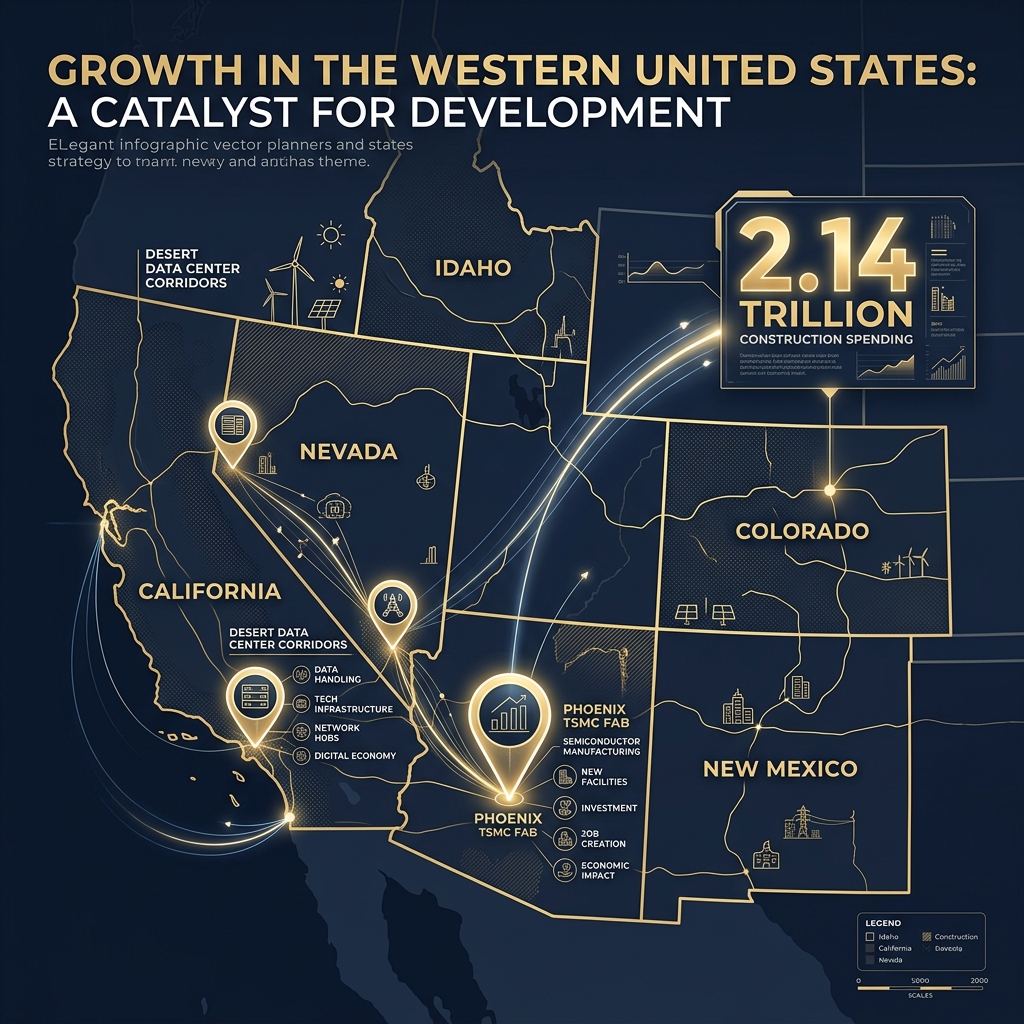
Figure 1: Western Theater Catalyst Zones. Highlighting the 6 Western states, TSMC Phoenix Fab, desert data center corridors, and the $2.14 Trillion infrastructure macro driver.
2. The Buyer's Powerhouse: Understanding SBA 7(a) Financing
The SBA 7(a) loan is the primary vehicle for business changes of ownership. By providing a government guarantee, the SBA mitigates risk for lenders, allowing them to finance deals that traditional banks might reject due to a lack of "hard" collateral.
Key Technical Specifications (Updated for 2026):
- check_circle Maximum Loan Amount: $5 million.
- check_circle Guarantee Percentages: 85% for loans of $150,000 or less; 75% for loans exceeding $150,000.
- check_circle Standard Maturity: Up to 10 years for business acquisitions.
- check_circle Alternative Base Rates: Effective March 1, 2026, lenders can offer variable rates tied to the Prime Rate, SOFR, or new 5-year and 10-year Treasury Note Rates, providing founders with enhanced strategic flexibility during servicing.
Under SOP 50 10 8, the SBA mandates a 10% minimum equity injection for complete changes of ownership to ensure the buyer has "skin in the game." However, as an expert advisor, I often guide founders through the 9:1 debt-to-worth exception: for partial changes of ownership or partner buyouts, the SBA may allow an injection of less than 10% if the business maintains a debt-to-worth ratio of no greater than 9:1.
To ensure a clean break, the SBA limits seller consulting agreements to 12 months. This is a vital risk-mitigation strategy; it ensures the "grit and reputation" of the founder is successfully transferred without the seller becoming a permanent crutch for the new operator.
3. The Seller's Strategic Tool: The Mechanics of Seller Financing
Seller financing, or a "carryback," is a loan the seller grants the buyer to cover a portion of the purchase price. It is the ultimate tool for filling "financing gaps" and increasing deal velocity.
The true power of this method lies in IRS 26 U.S. Code § 453. By using the "Installment Method," you recognize gain proportionally as payments are received. Rather than taking a massive tax hit in year one, you defer your liability and maintain an ongoing annuity.
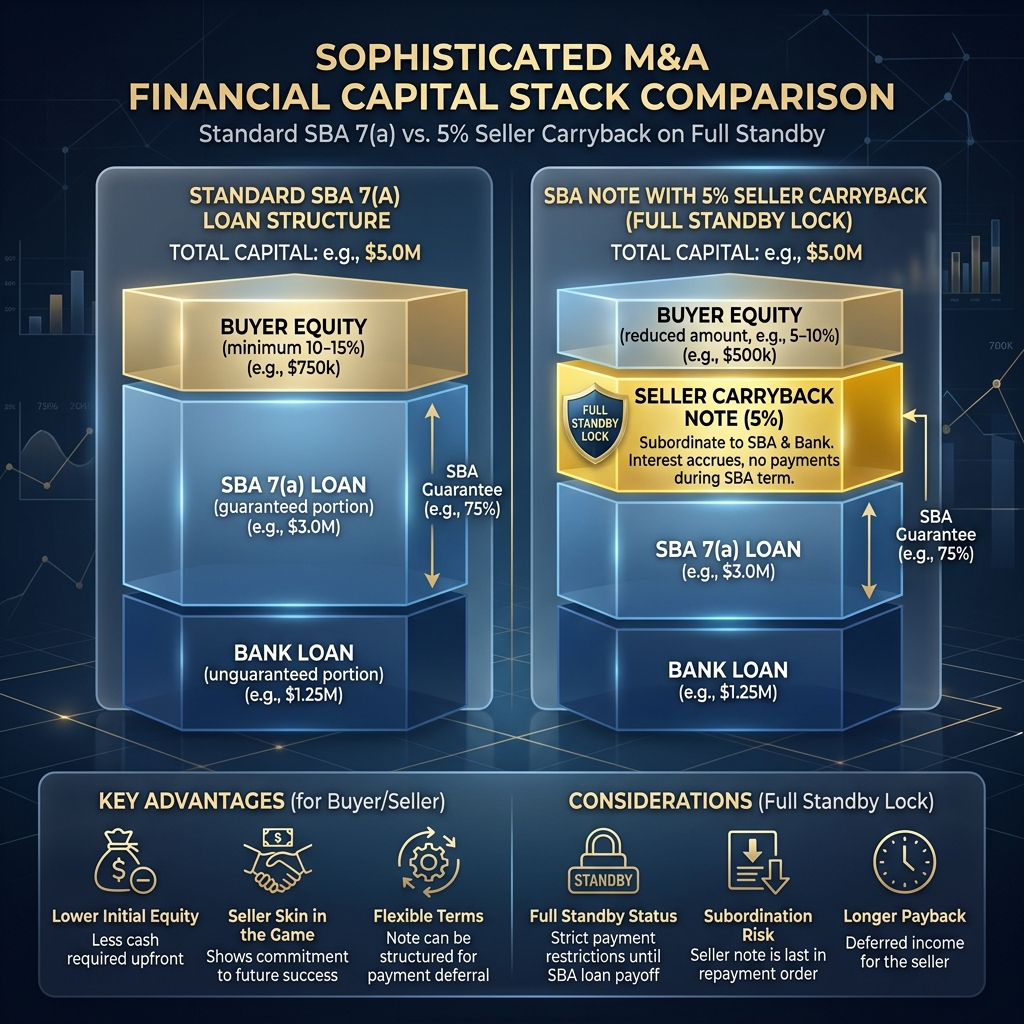
Figure 2: Capital Stack & Standby Mechanics. Comparing standard 90/10 SBA financing against a 75/5/5 structure utilizing a Seller Note under Full Standby rules.
In SBA-backed deals, a seller note can be used to meet the 10% equity requirement (typically covering up to 5%). However, founders must understand the "Full Standby" rule: if the note is used as equity, it cannot receive any payments for the entire life of the SBA loan. While this de-risks the deal for the bank, it requires meticulous cash flow planning for your retirement.
4. Side-by-Side Comparison: SBA Loans vs. Seller Financing
SBA 7(a) Loans
account_balanceSubject to bank and SBA "red tape" approval cycles.
Typically a lump sum capital gains event in Year 1.
Prime, SOFR, or 5/10-Yr Treasury Note benchmarks.
Covers intangible goodwill without hard asset requirements.
Full or near-full cash payout at transaction closing.
Seller Financing
handshakeFaster transaction with direct, flexible buyer negotiation.
Tax Deferral via IRS § 453 Installment Method.
Negotiated fixed or floating rate, often below bank prime.
Based on personal buyer trust and pledged business assets.
Creates an ongoing monthly or quarterly annuity revenue stream.
| Category | SBA 7(a) Loans | Seller Financing (Carryback) |
|---|---|---|
| Closing Speed | Subject to bank and SBA "red tape." | Faster; direct negotiation with less friction. |
| Collateral | Often covers goodwill/intangibles. | Based on personal trust and business assets. |
| Tax Impact | Typically a lump sum capital gains event. | Tax Deferral via IRS § 453 Installment Method. |
| Capital Access | Full or near-full payout at closing. | Creates an ongoing annuity revenue stream. |
| Interest Rates | Prime, SOFR, or Treasury Notes (March '26). | Negotiated; often lower than bank rates. |
| Rate Caps | Prime + 3% for loans over $350k. | Flexible; fixed or floating as negotiated. |
5. The Western US Context: SDE Normalization and the "California Tax Trap"
Maximizing value in the West requires SDE Normalization. As an operator, you've likely run personal expenses through the business to minimize taxes. We document these "add-backs", salaries, personal vehicles, and one-time repairs, to show the true earning power of the company.
For those in the "Western Theater," specifically California, you must prepare for the "California Tax Trap": a 13.3% state capital gains rate applied as ordinary income. Combined with federal taxes, this can erode 37% of your proceeds. Seller financing is the primary antidote to this trap, as § 453 allows you to spread income across multiple years, staying below the highest tax brackets.
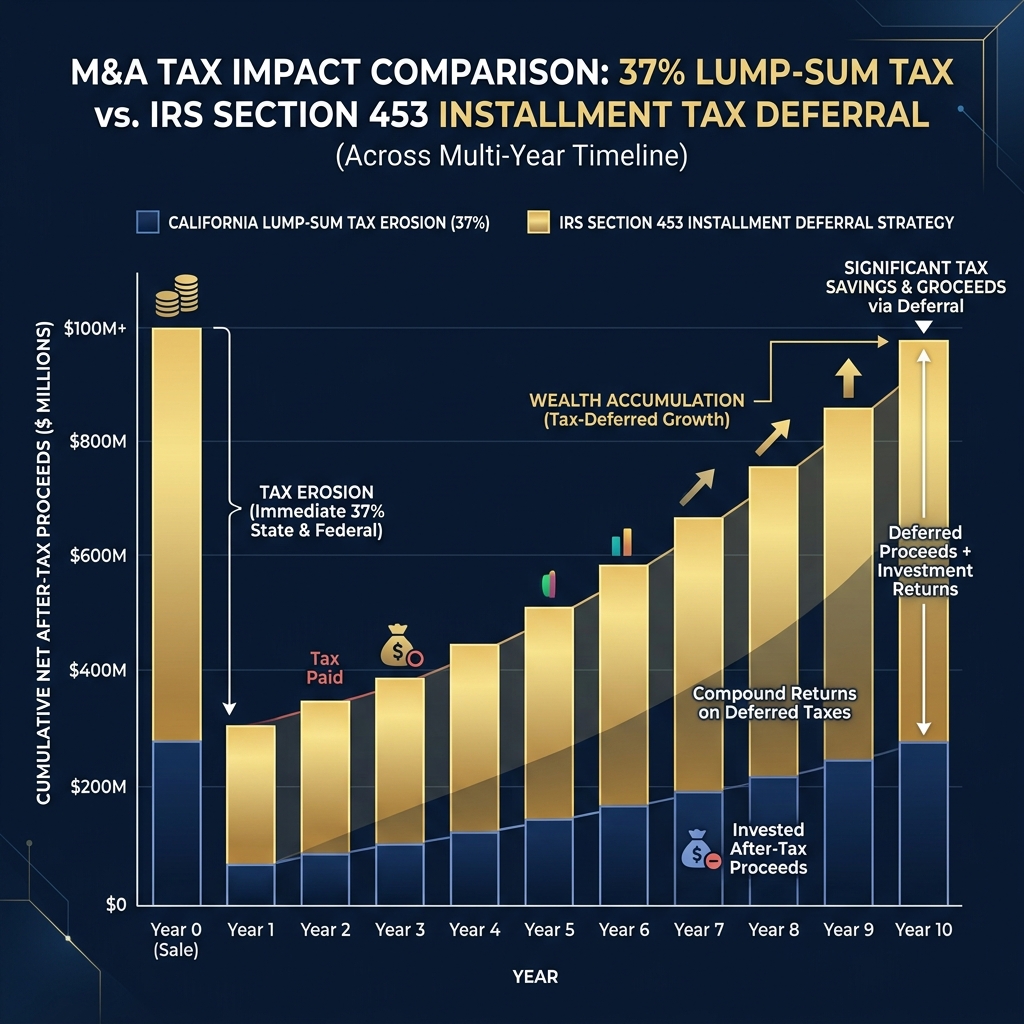
Figure 3: Tax Friction Analysis. Illustrating how IRS § 453 Installment Deferral prevents 37% lump-sum state and federal tax erosion.
Sector-Specific Multiples (2026 Data):
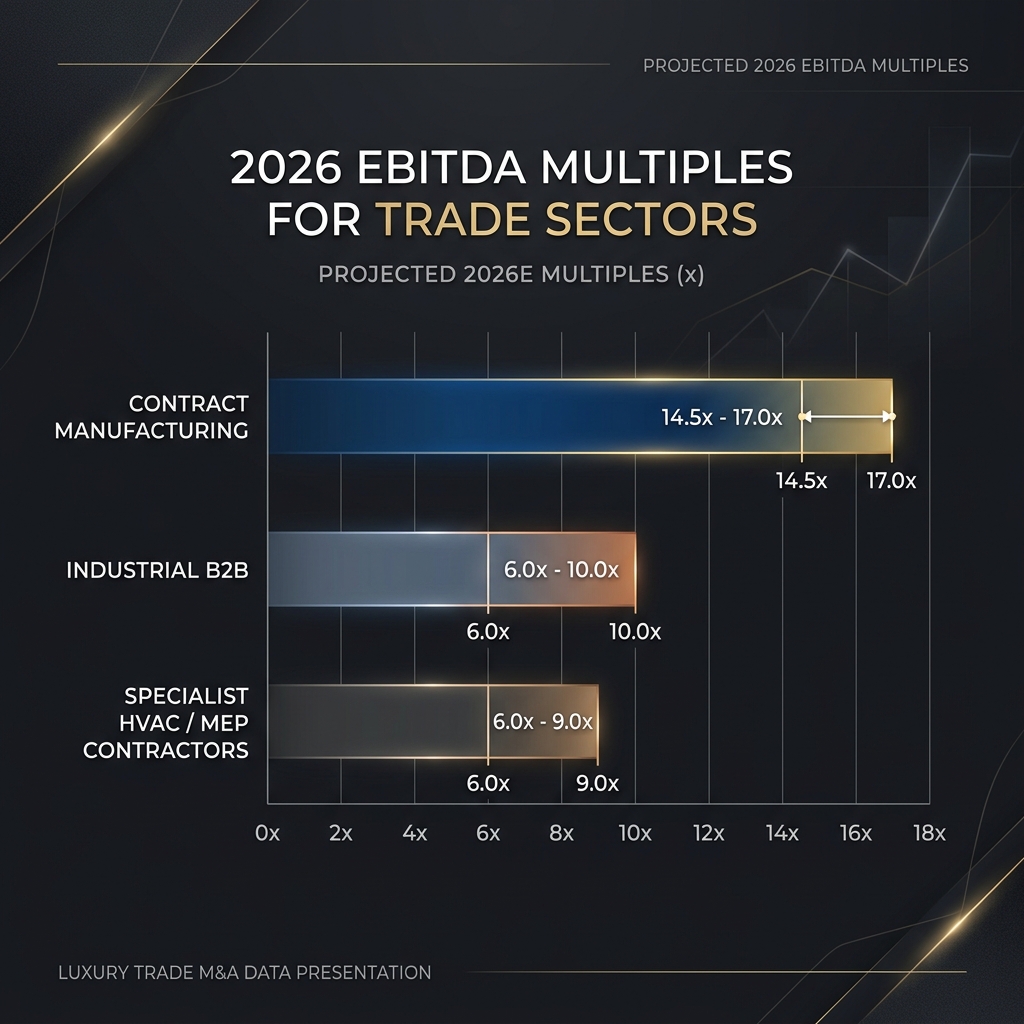
Figure 4: 2026 Western Regional M&A Multiples. EBITDA valuation benchmark data across trade and industrial sectors.
Driven by automation & ISO certifications.
Driven by recurring service contracts.
Driven by licensing moats & crew autonomy.
Real-World Value Drivers for Trade Businesses:
To secure a premium valuation, founders must document:
Licensing Moats
C-20 / C-36 licenses and clear Responsible Managing Officer (RMO) transition plans.
Recurring Revenue
Multi-year service contract portfolios that provide "annuity" stability for the acquirer.
Operational Autonomy
Proving field crews and dispatch can operate seamlessly without the owner on-site.
6. The Cortland Advantage: Bridging the Gap Between Operator and Broker
At Cortland Business Brokers, we provide an "Operator-Broker" model. Our founder, Stan Cortland, built and exited a national-scale Xerox dealership. We understand the logistics and the grit of the trades because we've sat in your chair. We don't just look at your P&L, we see the value in your crews and your service contracts.
The Cortland Shared Risk Model
100% Success-Fee Based
We only get paid when your transaction successfully closes at escrow.
$0 Upfront Retainers
We absorb all initial marketing, collateral preparation, and underwriting costs.
$0 Monthly Admin Fees
Zero hidden administrative fees or recurring retainers, guaranteed.
We use the "Blind Teaser" method to maintain absolute confidentiality from competitors and employees. Furthermore, our in-house underwriting literacy allows us to navigate SBA 7(a) hurdles, like the new Alternative Base Rate options, ensuring a buyer is qualified before they ever see your books.
7. Conclusion: Building Your Optionality
The goal of a professional valuation is to move from "uncertainty paralysis" to strategic clarity. Even if your exit is 36 months away, understanding your SDE valuation today allows you to choose your moment of departure on your own terms.
Ready to Determine Your True Market Valuation?
Request a no-cost, 100% confidential SDE valuation and strategic exit consultation today with our experienced Operator-Brokers.